Tips for Riding Safely
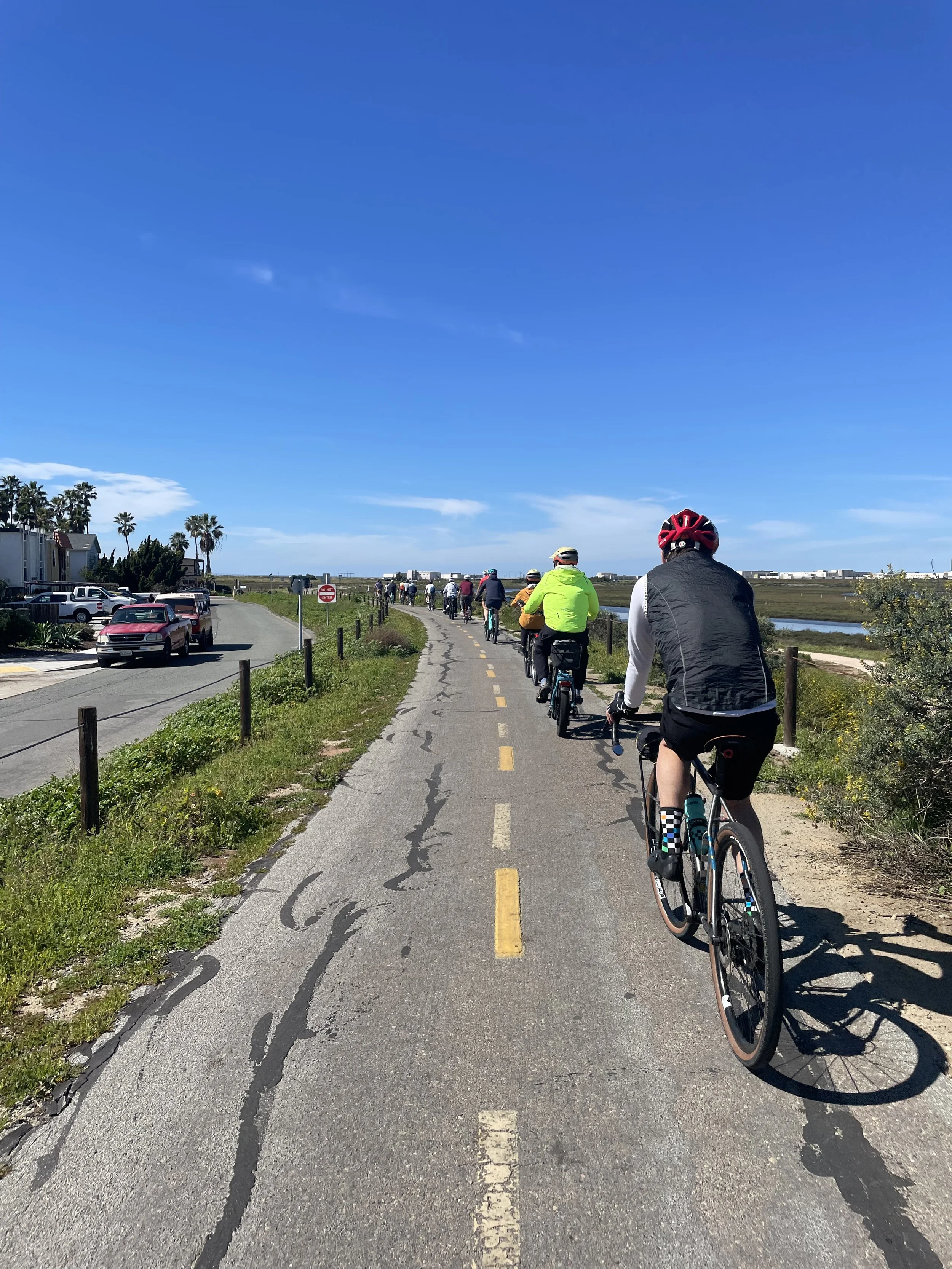
5 Tips for Riding City Streets
1. Ride on the Right
Always ride with the flow of traffic. Riding against traffic (as some walkers or runners do) is significantly more dangerous for cyclists.
Avoid riding on the sidewalk whenever possible. Sidewalks should be a last resort when road conditions are unsafe (and is illegal in some cities). Always yield to pedestrians, ride slowly, and walk your bike if needed to create a space that works for everyone.
2. Give Yourself Space
Leave enough room between yourself and other riders or vehicles to stop, react, and maneuver around hazards.
Keep enough distance from parked cars to not only avoid hitting an unexpected door opening, but also to prevent needing to swerve into the travel lane to avoid it.
When travel lanes are too narrow for a car to pass safely, ride closer to the center of the lane. This encourages drivers to use the adjacent lane to pass, giving you the space you need.
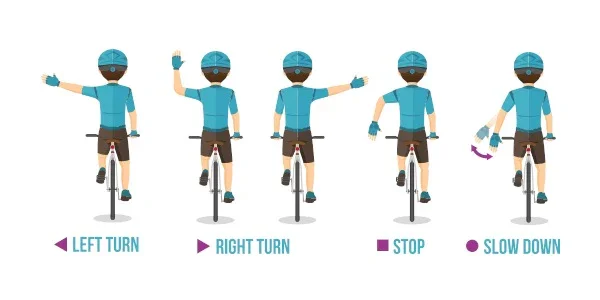
3. Communicate Clearly
Always signal before changing lanes or turning.
Look behind you to check for traffic and to communicate your intent.
Make eye contact with drivers when possible so they know you see each other.
4. Yield When Needed
When changing lanes or merging, always yield to traffic already in the destination lane (remember: the vehicle in the lane you want to enter has the right-of-way).
5. Position Yourself Wisely
Directional Positioning
Use the right-most lane that goes in the direction you’re traveling.
Speed Positioning
Choose your lane based on your speed relative to traffic.
Faster-moving traffic stays left; slower-moving traffic stays right.
Don’t Forget Your ABCs!
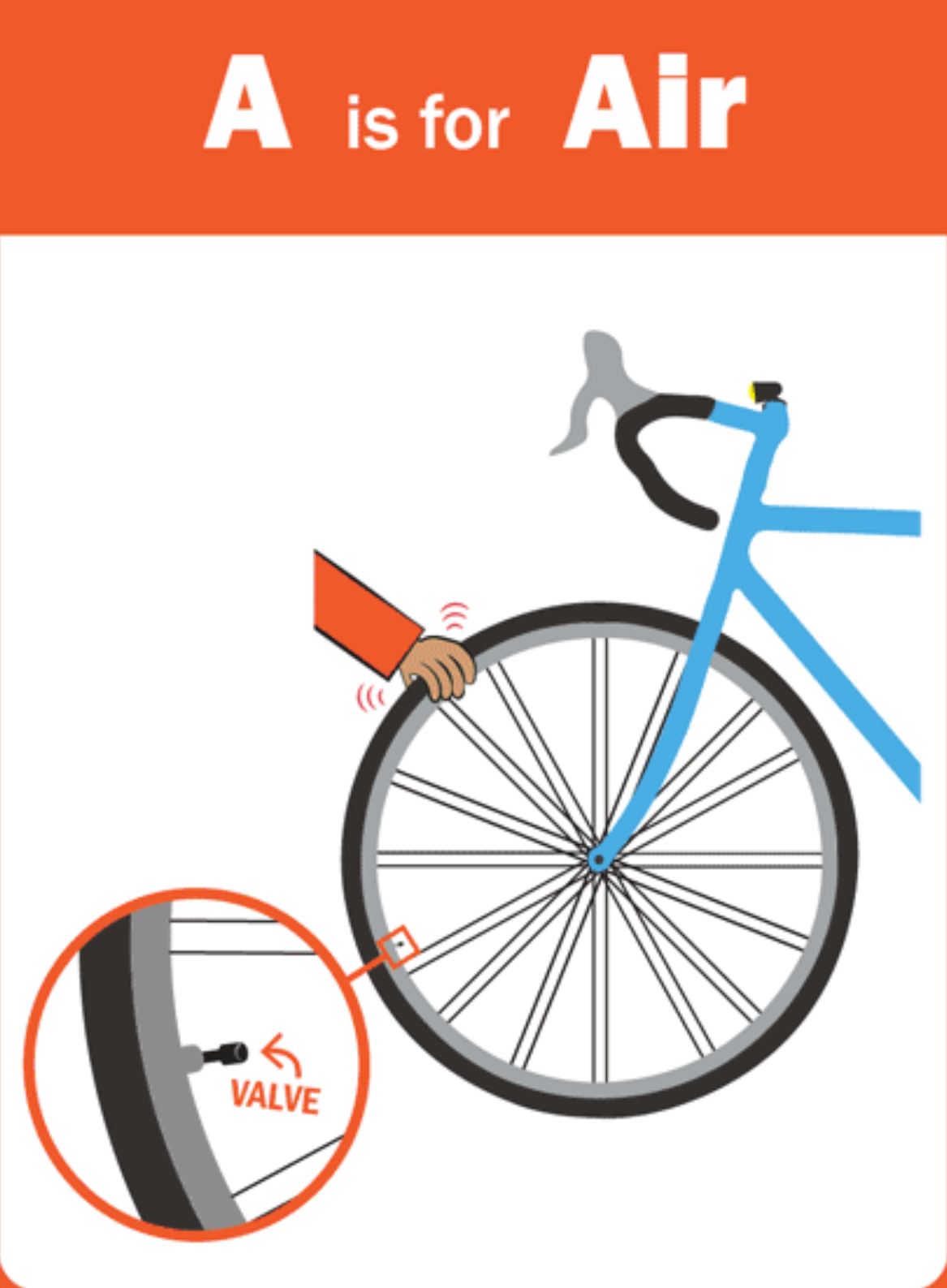
Air
Squeeze your tires to make sure they’re firm, not squishy.
Check the recommended PSI on the tire sidewall and inflate as needed.
Inspect the tire for cuts, bulges, or embedded debris.
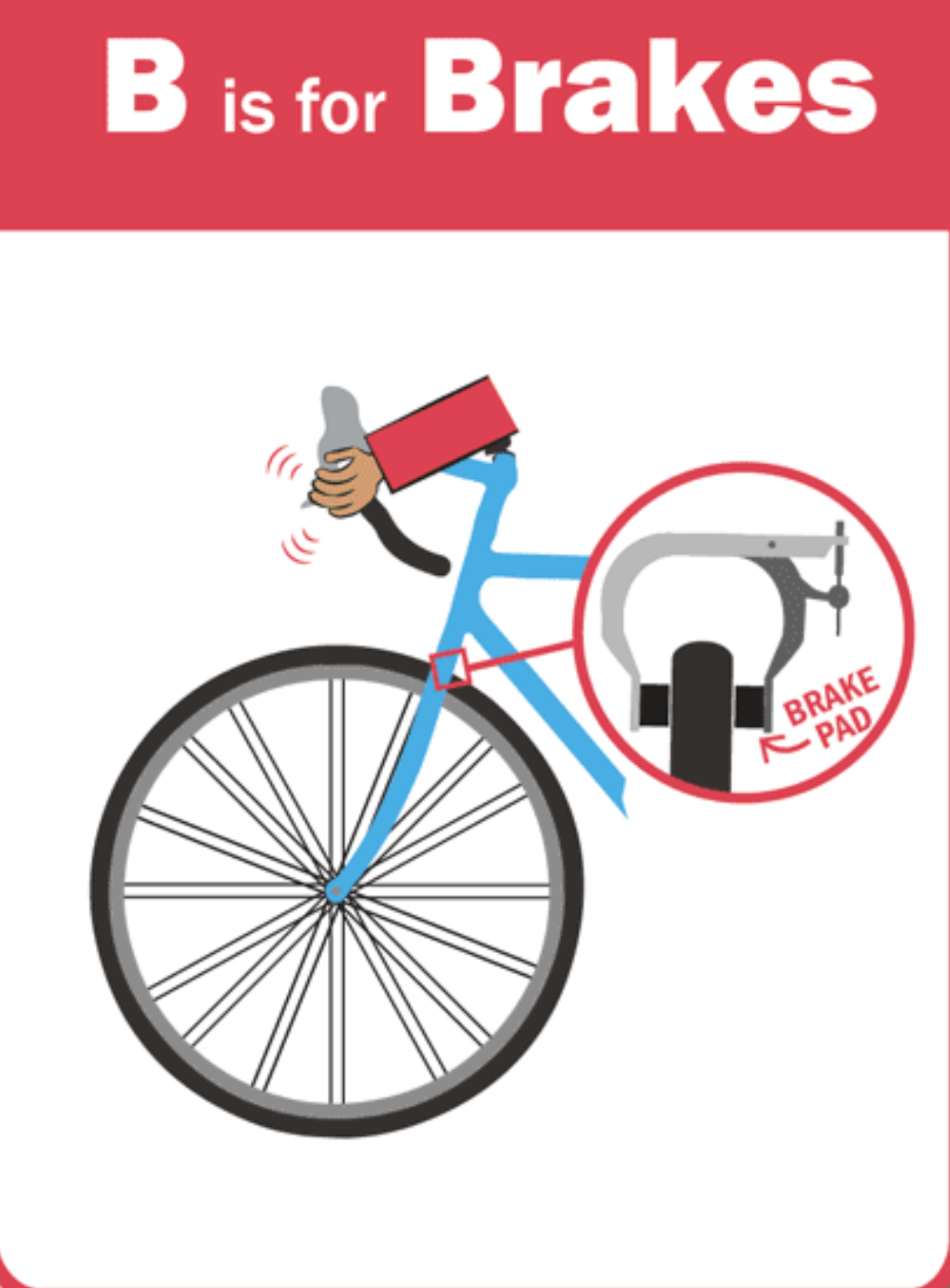
Brakes, Battery
Squeeze both brake levers: they should feel firm, not loose or spongy.
Make sure the brake pads aren’t worn down and that they hit the rim (not the tire).
Listen for scraping or rubbing, your wheel should spin freely.
Check that the cables are tight and not frayed.
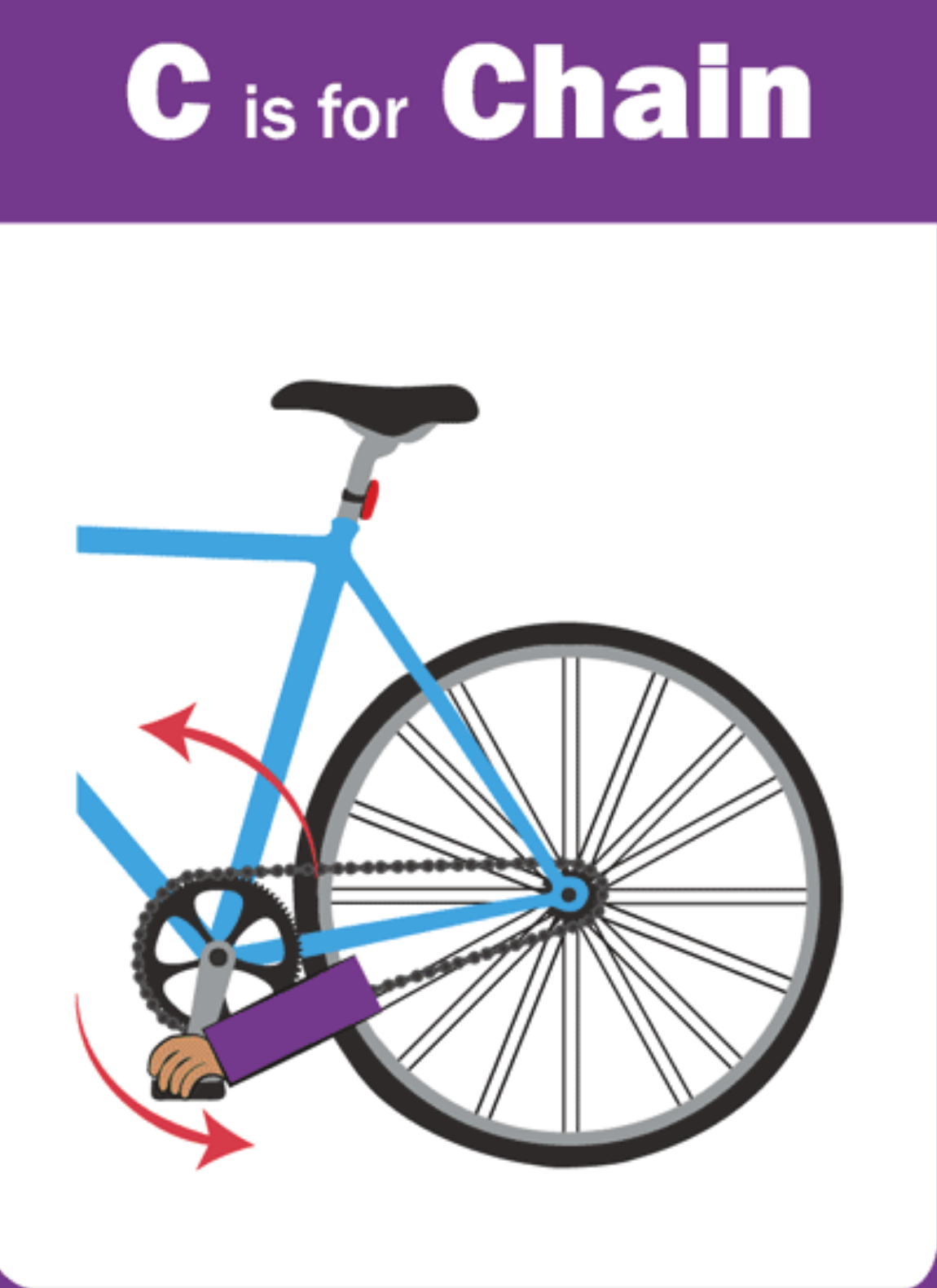
Chain, Cranks, and Cassette
Spin the pedals and watch the chain move smoothly through the gears.
Wipe away grit and apply a small amount of fresh chain lube as needed.
Make sure the chain isn’t too loose or too tight.
Check that the cranks are secure and don’t wobble.
Glance at the cassette/chainrings for excessive wear.
More Bicycle Safety Resources
Explore a wealth of bicycle safety tips and materials from the League's Bike Education Catalog, as well as from the National Highway Traffic Safety Administration.